Monday, September 14, 2020

Talking to your kids about coming back to school

 Welcome and welcome back to some families as we begin the 2020-2021 school year at Wheelock.  I am very excited to see the students again.  However, I am sure many families have a 'mixed bag' of emotions.  Teachers and staff are working so hard to ensure a safe and welcoming return to school.  Myself and Mrs. Bockhorst (our part time counselor) have put together some talking points we thought would be helpful for families.  

  1.  What to do if your child is feeling worried:

  1. Normalize - It is common to feel worried before we do something new, for both kids and adults

  2.  Remind of prior successes - help your child think of a time they did something they overcame their nerves

  3. Practice relaxation strategies 

    1. - Deep breaths - Roller Coaster Breathing 

    2. - Positive mantra - “I can do hard things.”


  1. How to help your child adapt to wearing masks

    1. Explain: Wearing a mask helps protect ourselves and other people

    2. Take a picture of you and your student wearing the mask

    3. Practice: 

      1. start small and build up from there 

      2. take small trips to libraries or stores so that kids can begin to practice mask wearing

      3. Wear the mask during a preferred activity like ipad time

    4. Play pretend with the mask, try putting a mask on your stuffed animal

    5. Have fun picking a mask, let your child get to chose

    6.  Practice what your child can say if another student takes off their mask - “Oops, don’t forget your mask.”


3. Explain how staying 6 feet apart keeps you safe

    1. - Help your child recognize how far 6 feet is 

      1. Measure it out together

      2. Draw it with chalk

      3. Airplane Arms

t

      1. Help your child rehearse what to say if someone is too close “Please remember six feet apart!” “Whoops, we have to remember our space”

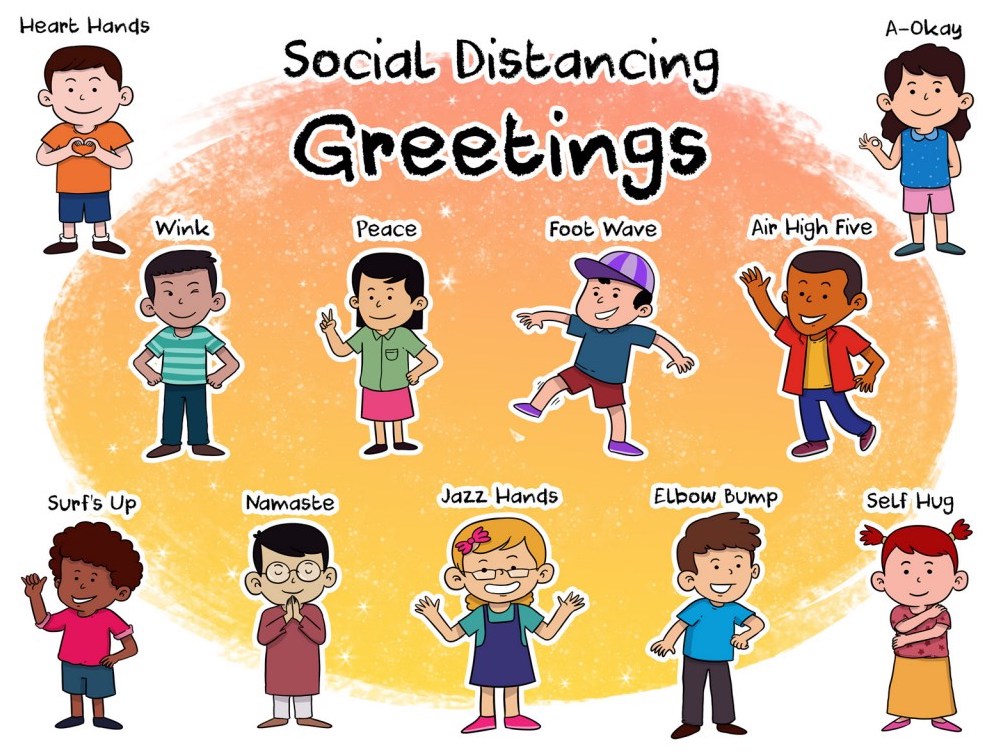
Saying Hello/Greeting Friends - Prepare your child that they can greet their friends with all sorts of friendly “hellos” from a distance

Friday, June 5, 2020

Resources to help talk to kids about racism

How do we teach our children anti-racism? These resources will help

I am writing this important blog post to provide resources/support to help you as parents and to help our children throughout this continued difficult time.  The horrific death of George Floyd along with the long standing issue of race in our country, is I'm sure on the forefront of many people's minds right now.  Not only as an elementary school psychologist, but as a mom of a four year old asking questions, I want to help provide some developmentally friendly resources so that we can do our part in making the world a better place.  

1. Here is a great social story that Mrs. Ryan (one of our district BCBAs) shared with me, this social story helps to explain things with kid friendly language and pictures

2. The Medfield Superintendent Dr. Marsden shared this article with several great pointers about talking to kids about race and racism

3. This website provides a list of 37 books that address race and discrimination

4. This website provides a list of helpful books according to age range for those of you who have kids spanning various ages.

5. Lastly, CNN is pairing up with Sesame Street to conduct a 'town hall' Saturday morning 6/6.  I know our kids at Wheelock are older than Sesame Street's target audience but reading the description of the event it seems like it would be a worthwhile resource.  They're having a panel of experts help to answer questions submitted by kids/families.  

I hope you all find these resources helpful, thank you for your time.

Thursday, March 12, 2020

Talking to Children about Covid-19


In an effort to help support the any anxiety about the ongoing concern of the Corona virus or Covid-19, I am going to share two very helpful resources.  The first is an article from the National Association of School Psychologists (NASP) with good talking points.

https://www.nasponline.org/resources-and-publications/resources-and-podcasts/school-climate-safety-and-crisis/health-crisis-resources/talking-to-children-about-covid-19-(coronavirus)-a-parent-resource

This next resource is set up in a comic format and may or may not be appropriate to share with your kids, based on your judgement. 

https://www.npr.org/sections/goatsandsoda/2020/02/28/809580453/just-for-kids-a-comic-exploring-the-new-coronavirus

I hope you find these resources helpful. 


Wednesday, January 29, 2020

Supporting Your Child with a Disability


By Child Mind Institute 

I recently came across this article (linked above) which highlights some great ways to support your child if they have a disability.  I often hear about concerns with kids who may have low self esteem because of their disabilities.  I think this is such an important topic and a great opportunity for open and ongoing discussion.  I have blogged and shared resources about this topic before (see earlier posts), but I think this article highlights some key points as well.  I especially like how the Child Mind Institute highlights how a student's disability (often times) has nothing to do with their intelligence level.  Most students with a learning disability whether it's reading based or ADHD are of at least Average intelligence levels.  I think this is an important factor to point out to kids.  

Wednesday, November 20, 2019

Words Matter

I recently came across this great info-graphic and just had to share it.  Sometimes simple changes like the suggestions listed below can make such a big difference.  I felt really inspired by these easy updates and hope you do too!  I especially like utilizing the phrase 'could you use a break?', helping to promote better self monitoring and decision making. 


Photo credit: weareteachers.com 


Monday, September 9, 2019

Talking to your children about their differences

Hello Wheelock families, welcome back to to start of another great school year!  I feel very inspired to start my 2019-2020 school blog with such an important topic.  So often, I hear from parents about kids coming home and feeling down on themselves because of a difference or challenge they face.  Maybe these kids receive extra help with their speech, reading, math or social/emotional weaknesses and they are starting to feel self conscious about it.  Although kids may not see it yet, there are so many students in each classroom that receive extra support for a variety of reasons.  Regardless, I believe this is a great teachable moment.  There are a lot of great resources about this topic and here are some of the key points I want to share.

1. Start by talking about how everyone has strengths and weaknesses
- there is no one person who is good at everything
- talk to your child about what you are good at and what is not easy for you
- help to point out specific examples for yourself and your child

2. Empower and encourage
- help them build a positive attitude about their difference(s)
- acknowledging their areas of difficulty will help fuel their self advocacy
- helping them to understand what strategies work for their areas of difficulty
For example:
"We know that you have trouble focusing and listening, so remember to ask the teacher to sit in the front or ask for a quick brain break"
- sometimes practicing (role playing) what to say if other kids ask them questions about their differences can help them feel prepared
For example: "Hey why do you wear glasses now?", "I have these new glasses because I used to see double when I looked at the board, boy what a relief!"

3. Partnering with schools/teachers to communicate and collaborate about supporting your child will be key
- Be sure to reach out to your child's teacher and/or specialist to keep the communication open

4. Other tips for talking to your kids about this topic:
- "Your challenges do not define you"
- "I know it can be uncomfortable to talk about this, I am here to listen"
- It's important to keep this conversation going, especially as kids get older and interpret things different at different developmental points
- Praise progress and effort (not just end results)
- Provide honest and specific compliments over frequent general praise (i.e. I like how hard you tried to figure out that math problem vs. good job)
- watching videos of other kids or researching famous people who also have learning differences or other disabilities can better put things in perspective for kids

It's very common for kids with any type of learning or social/emotional difficulty to display some self esteem concerns.  Helping to empower our kids to acknowledge their area of difficulties will help to eventually make them feel more liberated.  They will soon learn about friends and classmates that also have differences/weaknesses. 

I hope this information has been helpful, like I said there are so many great resources on this topic but here are a few I thought were particularly good:

https://www.imdetermined.org/

https://childmind.org/article/how-to-help-kids-talk-about-learning-disabilities/

https://www.understood.org/en/learning-attention-issues/understanding-childs-challenges/talking-with-your-child/how-to-talk-to-your-child-about-learning-and-attention-issues


Wednesday, April 10, 2019

New Article about Childhood Anxiety

Hi Everyone, happy almost april vacation :)  I found this article and thought it was really important to share.  I have come across this article through a variety of different well known psychology resources.  I am glad to see this research getting coverage.  In this article, the Yale Child Study Center found great results in helping to reduce childhood anxiety by coaching parents.  The article is titled New childhood anxiety treatment focuses on the parent.  In this article you will find some nice language about what to say to children, but please feel free to check out the resources section of my website for some good books and resources. 

Thanks for visiting!