Photo credit: weareteachers.com
Wednesday, November 20, 2019
Words Matter
I recently came across this great info-graphic and just had to share it. Sometimes simple changes like the suggestions listed below can make such a big difference. I felt really inspired by these easy updates and hope you do too! I especially like utilizing the phrase 'could you use a break?', helping to promote better self monitoring and decision making.
Monday, September 9, 2019
Talking to your children about their differences
Hello Wheelock families, welcome back to to start of another great school year! I feel very inspired to start my 2019-2020 school blog with such an important topic. So often, I hear from parents about kids coming home and feeling down on themselves because of a difference or challenge they face. Maybe these kids receive extra help with their speech, reading, math or social/emotional weaknesses and they are starting to feel self conscious about it. Although kids may not see it yet, there are so many students in each classroom that receive extra support for a variety of reasons. Regardless, I believe this is a great teachable moment. There are a lot of great resources about this topic and here are some of the key points I want to share.
1. Start by talking about how everyone has strengths and weaknesses
- there is no one person who is good at everything
- talk to your child about what you are good at and what is not easy for you
- help to point out specific examples for yourself and your child
2. Empower and encourage
- help them build a positive attitude about their difference(s)
- acknowledging their areas of difficulty will help fuel their self advocacy
- helping them to understand what strategies work for their areas of difficulty
For example:
"We know that you have trouble focusing and listening, so remember to ask the teacher to sit in the front or ask for a quick brain break"
- sometimes practicing (role playing) what to say if other kids ask them questions about their differences can help them feel prepared
For example: "Hey why do you wear glasses now?", "I have these new glasses because I used to see double when I looked at the board, boy what a relief!"
3. Partnering with schools/teachers to communicate and collaborate about supporting your child will be key
- Be sure to reach out to your child's teacher and/or specialist to keep the communication open
4. Other tips for talking to your kids about this topic:
- "Your challenges do not define you"
- "I know it can be uncomfortable to talk about this, I am here to listen"
- It's important to keep this conversation going, especially as kids get older and interpret things different at different developmental points
- Praise progress and effort (not just end results)
- Provide honest and specific compliments over frequent general praise (i.e. I like how hard you tried to figure out that math problem vs. good job)
- watching videos of other kids or researching famous people who also have learning differences or other disabilities can better put things in perspective for kids
It's very common for kids with any type of learning or social/emotional difficulty to display some self esteem concerns. Helping to empower our kids to acknowledge their area of difficulties will help to eventually make them feel more liberated. They will soon learn about friends and classmates that also have differences/weaknesses.
I hope this information has been helpful, like I said there are so many great resources on this topic but here are a few I thought were particularly good:
https://www.imdetermined.org/
https://childmind.org/article/how-to-help-kids-talk-about-learning-disabilities/
https://www.understood.org/en/learning-attention-issues/understanding-childs-challenges/talking-with-your-child/how-to-talk-to-your-child-about-learning-and-attention-issues
Wednesday, April 10, 2019
New Article about Childhood Anxiety
Hi Everyone, happy almost april vacation :) I found this article and thought it was really important to share. I have come across this article through a variety of different well known psychology resources. I am glad to see this research getting coverage. In this article, the Yale Child Study Center found great results in helping to reduce childhood anxiety by coaching parents. The article is titled New childhood anxiety treatment focuses on the parent. In this article you will find some nice language about what to say to children, but please feel free to check out the resources section of my website for some good books and resources.
Thanks for visiting!
Thursday, February 7, 2019
Stopping Negative Thoughts and Calming Apps
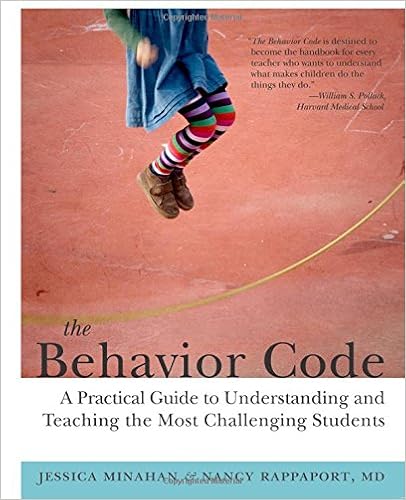
Hello families of Wheelock, I don't know if you were lucky enough to get the opportunity to see Jessica Minahan yesterday (author of the Behavior Code), hopefully you were, but if you were not as lucky I am going to share some helpful information here today. I have been looking forward to this professional development day all year. I was fortunate enough to see her a year and a half ago and I just knew this would be a presentation everyone could appreciate! I wrote a previous blog post on some of my favorite tips from that day (Rethinking Strategies for Anxiety and Opposition). She shared a lot of these strategies yesterday but I wanted to focus this blog post on helping kids to stop the negative thoughts.
We all know a lot about growth mindset, changing our thinking from "I can't" to "I just haven't done it YET". This type of coaching to re-frame their thinking is invaluable but Jessica also focused a lot on stopping the negative thoughts by intervening early on. Often times, we may leave kids to do independent tasks or homework for several minutes. Within this time frame of just minutes, our anxious kids can have a flood of negative thoughts. "I can't do this" "I'm so bad at math" "This is going to take all night". Anxiety can cause all kinds of incorrect or catastrophic thoughts. Jessica's advice is to help kids get started, set them up for success and then let them do things independently.
Another great tip Jessica encouraged us all to think about is what types of breaks we are giving our anxious kids. Often times we go for a walk or let kids color for a few minutes. Not to say these aren't great strategies for some kids, but it may not work for others, since negative thoughts can still occur during a walk or while coloring. Jessica encouraged us to think about 'cognitive' breaks, or a way to distract our mind in a positive way so that we can stop the obtrusive thoughts. For example, games like 'soduku' or cross words puzzles can help get our mind off negative thoughts. Or even singing a favorite song and reciting lines from their favorite movie. Jessica was also so kind to provide some great App to help as calming breaks or cognitive breaks. I have tried the 'Calm' app myself and loved it! Here is a list:
- Calm
- Headspace
- Moodnotes ($)
- Moodpath
- Pacifica
- Pixel Thoughts
- Happify
- Talkspace
- SugarBetter
- 7 cups
Tuesday, August 21, 2018
Hello and Helpful segment for back to school anxiety

Hello new and old friends to Wheelock Elementary School! My name is Jenna Johnson and I am the full time School Psychologist here at Wheelock. I can hardly believe it but I am entering my sixth year in Medfield and I absolutely love my job. I look forward to seeing my third grade friends again and meeting new second grade friends. Welcome to my blog, I try to post helpful and relevant resources from time to time. If you ever want to reach out to me for more specific questions or concerns please email me at jennajohnson@email.medfield.net.
As the new school year is vastly approaching, there may be great feelings of excitement for what a new school year can bring, but I know there are plenty of kids and parents who may be a bit anxious. Therefore, I just wanted to share a great audio segment I found from the National Association of School Psychologist (NASP) website. I always find such great resources from NASP and this one is dedicated to supporting kids of all ages who may have some back to school anxiety. The staff at Wheelock work so hard to help support the transition back into school and we look forward to the 2018-2019 school year!
Audio segment found here:
Thursday, February 15, 2018
Monday, December 4, 2017
'Rethinking Strategies for Anxiety and Opposition'

A few weeks ago I had the pleasure of attending a conference called 'Rethinking Strategies for Anxiety and Opposition' given by Jessica Minahan, who wrote The Behavior Code. This was one of the most beneficial conferences I have ever attended. It was a great feeling to walk out of the door with so many applicable ideas. I picked a few of my favorite strategies/ideas to share at a staff meeting recently and I am writing today to share them with all of you.
Jessica Minahan focused on three main areas: transitions, behaviors triggered by writing and interaction strategies. Some of these could be easily adapted for home as well.
1. Transition ‘Sponge’- a quick one two minute activity when going from preferred to non-preferred (after recess). The idea is to help get kids in their seat/work area, ready to learn with a less preferred activity/tool in the middle. The idea of going from preferred-less preferred-non-preferred. At home, this might look like: playing outside-cross word puzzle at work area-homework. Some transition sponges include:
- Brainpop video
- crossword puzzle
- Mindfulness minute
- Go noodle
2. Take a picture of what's expected. For teachers it might be projecting a picture of the next set up. At home, this might look like taking a picture of what you expect a clean room to look like. Kids are encouraged to 'match the picture'.
3. Ideas for Stopping/Ending tasks
- Often our tricky kids struggle to stop/end activities, so not only using a time timer but teaching them what is a ‘stopping plan’
- After giving a give minute warning, asking them ‘what is your favorite minute stopping plan?’
- Or telling them what a good stopping plan is- five more minutes is… two more pages of the book, ten more points in a game, etc.
- Give them a pausing point (with visual)
- Instead of ‘Stop Tapping your pencil’ or ‘Sit up Straight” ---->Say ‘Can you check yourself’- promoting self assessment
- Help children to re-frame ‘All or Nothing” thoughts to a smaller more manageable problem
Ex. “I can’t” ---> “Do you just want to check in to make sure you are doing it right?”
5. Self Assessment with Writing (or homework)
Self Monitoring- use 1-5 scale have kids write in the top corner before starting how hard they think it’s going to be. Then later on in the day or next day rate how hard it actually was.
Before After
5
|
3
|
4
|
2
|
5
|
2
|
Subscribe to:
Posts (Atom)