Hello families of Wheelock, I don't know if you were lucky enough to get the opportunity to see Jessica Minahan yesterday (author of the Behavior Code), hopefully you were, but if you were not as lucky I am going to share some helpful information here today. I have been looking forward to this professional development day all year. I was fortunate enough to see her a year and a half ago and I just knew this would be a presentation everyone could appreciate! I wrote a previous blog post on some of my favorite tips from that day (Rethinking Strategies for Anxiety and Opposition). She shared a lot of these strategies yesterday but I wanted to focus this blog post on helping kids to stop the negative thoughts.
We all know a lot about growth mindset, changing our thinking from "I can't" to "I just haven't done it YET". This type of coaching to re-frame their thinking is invaluable but Jessica also focused a lot on stopping the negative thoughts by intervening early on. Often times, we may leave kids to do independent tasks or homework for several minutes. Within this time frame of just minutes, our anxious kids can have a flood of negative thoughts. "I can't do this" "I'm so bad at math" "This is going to take all night". Anxiety can cause all kinds of incorrect or catastrophic thoughts. Jessica's advice is to help kids get started, set them up for success and then let them do things independently.
Another great tip Jessica encouraged us all to think about is what types of breaks we are giving our anxious kids. Often times we go for a walk or let kids color for a few minutes. Not to say these aren't great strategies for some kids, but it may not work for others, since negative thoughts can still occur during a walk or while coloring. Jessica encouraged us to think about 'cognitive' breaks, or a way to distract our mind in a positive way so that we can stop the obtrusive thoughts. For example, games like 'soduku' or cross words puzzles can help get our mind off negative thoughts. Or even singing a favorite song and reciting lines from their favorite movie. Jessica was also so kind to provide some great App to help as calming breaks or cognitive breaks. I have tried the 'Calm' app myself and loved it! Here is a list:
- Calm
- Headspace
- Moodnotes ($)
- Moodpath
- Pacifica
- Pixel Thoughts
- Happify
- Talkspace
- SugarBetter
- 7 cups
Thursday, February 7, 2019

Tuesday, August 21, 2018
Hello and Helpful segment for back to school anxiety

Hello new and old friends to Wheelock Elementary School! My name is Jenna Johnson and I am the full time School Psychologist here at Wheelock. I can hardly believe it but I am entering my sixth year in Medfield and I absolutely love my job. I look forward to seeing my third grade friends again and meeting new second grade friends. Welcome to my blog, I try to post helpful and relevant resources from time to time. If you ever want to reach out to me for more specific questions or concerns please email me at jennajohnson@email.medfield.net.
As the new school year is vastly approaching, there may be great feelings of excitement for what a new school year can bring, but I know there are plenty of kids and parents who may be a bit anxious. Therefore, I just wanted to share a great audio segment I found from the National Association of School Psychologist (NASP) website. I always find such great resources from NASP and this one is dedicated to supporting kids of all ages who may have some back to school anxiety. The staff at Wheelock work so hard to help support the transition back into school and we look forward to the 2018-2019 school year!
Audio segment found here:
Thursday, February 15, 2018
Monday, December 4, 2017
'Rethinking Strategies for Anxiety and Opposition'
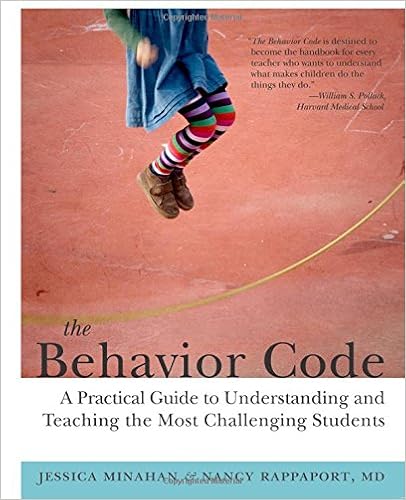
A few weeks ago I had the pleasure of attending a conference called 'Rethinking Strategies for Anxiety and Opposition' given by Jessica Minahan, who wrote The Behavior Code. This was one of the most beneficial conferences I have ever attended. It was a great feeling to walk out of the door with so many applicable ideas. I picked a few of my favorite strategies/ideas to share at a staff meeting recently and I am writing today to share them with all of you.
Jessica Minahan focused on three main areas: transitions, behaviors triggered by writing and interaction strategies. Some of these could be easily adapted for home as well.
1. Transition ‘Sponge’- a quick one two minute activity when going from preferred to non-preferred (after recess). The idea is to help get kids in their seat/work area, ready to learn with a less preferred activity/tool in the middle. The idea of going from preferred-less preferred-non-preferred. At home, this might look like: playing outside-cross word puzzle at work area-homework. Some transition sponges include:
- Brainpop video
- crossword puzzle
- Mindfulness minute
- Go noodle
2. Take a picture of what's expected. For teachers it might be projecting a picture of the next set up. At home, this might look like taking a picture of what you expect a clean room to look like. Kids are encouraged to 'match the picture'.

3. Ideas for Stopping/Ending tasks
- Often our tricky kids struggle to stop/end activities, so not only using a time timer but teaching them what is a ‘stopping plan’
- After giving a give minute warning, asking them ‘what is your favorite minute stopping plan?’
- Or telling them what a good stopping plan is- five more minutes is… two more pages of the book, ten more points in a game, etc.
- Give them a pausing point (with visual)

- Instead of ‘Stop Tapping your pencil’ or ‘Sit up Straight” ---->Say ‘Can you check yourself’- promoting self assessment
- Help children to re-frame ‘All or Nothing” thoughts to a smaller more manageable problem
Ex. “I can’t” ---> “Do you just want to check in to make sure you are doing it right?”
5. Self Assessment with Writing (or homework)
Self Monitoring- use 1-5 scale have kids write in the top corner before starting how hard they think it’s going to be. Then later on in the day or next day rate how hard it actually was.
Before After
5
|
3
|
4
|
2
|
5
|
2
|
Friday, November 17, 2017
Exciting Honor

I just received some exciting news that my little Wheelock School Psychology blog was awarded one of the Top Ten School Psychology blogs according to the website feedspot. I am quite tickled and surprised to be included with such helpful websites that I often find myself visiting. The link to the article is listed below. There are so many other great websites included on the list!
**One of my favorites: School Psyched.
https://blog.feedspot.com/school_psychologist_blogs/
I will certainly use this honor to continue my goal of helping students, families and staff alike! If anyone has any requests of topics they would like to see a post about please feel free to email me! Thanks for taking the time to visit my little blog :)
Monday, September 11, 2017
Welcome Back and helpful tips for anxious kids
Welcome new families to Wheelock School and/or Welcome Back to our third grade families!
The start of school year brings on so many emotions; excitement and nervousness and everything in between. To help with any of those nervous or anxious feelings I have included
this visual (seen below) with some manageable tips.
Another great resource for the start of school was put out by the National Association of School Psychologists, link found here: Back to School Tips Some of my favorite tips include; putting a note of encouragement in your child's backpack and making sure there is plenty of time to get ready in the morning. If the first the first week or so is hard, please know this can be quite common. Try your best to remain calm, reassuring them while remaining positive will go a long way. The schools are filled with teachers and staff who know what to do to help your child!

Hope this was helpful and thanks for checking out my site!
Tuesday, February 14, 2017
Welcome Franklin- Good tips for Parents of Dog-shy kids

Welcome Franklin!
Starting after February vacation we will have a wonderful addition to the Wheelock Elementary school, Franklin the therapy dog. There is such extensive research about the positive effects of a therapy dog in schools, one major benefit being the improvement of social/emotional well being. On the Wheelock home page you will find a slideshow with a more extensive list of what the research shows, as well as more information about logistics: Wheelock Website
As exciting as this is, we realize there are many students who may be nervous or even fearful of dogs. I would like the community to know that I am here to help any students/classes who may need extra support if they are feeling nervous/anxious about dogs. We know that sometimes kids may develop a fear of dogs because of a lack of exposure or perhaps a parent has this same fear. Children often feel nervous or scared because of a lack of control around dogs. Luckily, Franklin is highly trained and will be in a very controlled setting at school. This may be an ideal place to help a child learn to work through their dog fears.
Here are some GENERAL tips to help support kids who may be afraid of DOGS
- As we would encourage with any type of anxiety, it's best to acknowledge their feeling without reacting too strongly: "I understand that you are scared of dogs". We want to steer clear from reacting too strongly and inadvertently reinforcing their their fear.
- Offer reassurance with a calm and confident tone of voice: "I understand and I am right here with you"
- Model confidence around dogs and be mindful of NOT asking 'loaded' questions like: "is it safe to pet your dog" or "does your dog bite?" Try this instead: "Can we meet your dog".
Tips for first Interactions:
- Systematic Exposure (slow introductions that start out small) can be a helpful way to eliminate fears. This may look like watching a video of a dog, looking at dogs from across the park and then a trip to the pet store where kids can safely view animals behind an enclosement or gate.
- Having a dog on a leash or behind a gate will be a helpful way to introduce your child to a dog you know.
** Franklin will often be using a gentle leader, leash and always have a work vest on at Wheelock (so he knows he is working) **
- Role play is often a helpful method for teaching kids how to handle a tricky situation. For example, they could act out with a stuffed animal dog how they would handle different scenarios.
- Also previewing with the child ahead of time what might happen in an effort to take away some of the unpredictability. Letting them know that some dogs like to lick people as a way of meeting them.
** This will not happen with Franklin as he is highly trained to wait until commanded to do anything** However kids may earn the chance to earn 'kisses' from Franklin- as this will be one of his commands.
- When a child does first meet a dog, it's helpful for the adult to narrate their experiences so they know what is going on. For example, "the dog is moving his bottom quickly because he is excited to meet you".
Please feel free to email me if you have any concerns regarding your child: jennajohnson@email.medfield.net
** Tips summarized from a couple helpful websites:
http://www.huffingtonpost.com/susan-stiffelman/8-tips-for-helping-kids-g_b_6102352.html
http://www.positiveparentingconnection.net/fear-of-dogs/
http://www.apa.org/monitor/julaug05/fighting.aspx
Subscribe to:
Posts (Atom)